
POLICY BRIEF
International Women’s Day 2026 Theme: Rights. Justice. Action. For ALL Women and Girls
-
Executive summary
Women are central to Zambia’s agricultural and food systems. Across rural communities they produce food, manage seed systems, safeguard biodiversity and sustain household nutrition. Yet despite these contributions, structural gender inequalities continue to limit their access to land, finance, extension services and decision-making spaces. These barriers weaken both household food security and the broader transition toward agroecological farming systems.
Women constitute approximately 52% of Zambia’s population, and a large proportion of rural women depend on agriculture for their livelihoods. However, their ability to benefit from agricultural investments remains constrained by unequal land rights, limited access to productive resources and persistent social norms that restrict women’s participation in leadership and governance structures.
As Zambia and its partners promote agroecology as a pathway to climate resilience and sustainable agriculture, there is an urgent need to ensure that these transitions are gender-responsive and rights-based. This policy brief calls for concrete action to address structural inequalities and ensure that agroecological transformation benefits all women and girls.
-
The problem: Gender inequality in Zambia’s agriculture
Despite their critical role in food production and natural resource management, women continue to face systemic challenges across Zambia’s agricultural sector.
Participation and work
Women contribute significantly to farming, food processing and household nutrition. However, their labour is often undervalued and under-recognized. Many women simultaneously manage agricultural work alongside unpaid care responsibilities such as childcare, food preparation and water collection. This “double burden” limits the time and resources women can invest in innovation, training and leadership opportunities.
While women are actively involved in agricultural production, they are often concentrated in lower-value segments of value chains and have less control over income generated from agricultural activities.
Land rights and tenure
Secure land tenure remains one of the most critical challenges affecting women farmers. Although Zambia’s legal frameworks promote gender equality in land rights, the reality on the ground is more complex. Customary land tenure systems which govern much of the country’s land are strongly influenced by cultural norms that tend to prioritise men’s land ownership.
As a result, many women access land primarily through male relatives such as husbands or fathers. This means their land rights can be insecure, particularly in cases of divorce, widowhood or family disputes. Without secure land tenure, women may be reluctant to invest in long-term sustainable practices such as agroforestry or soil restoration.
Strengthening women’s land rights is therefore essential not only for gender equality but also for sustainable agricultural transformation.
Access to inputs and services
Women farmers often face barriers when accessing agricultural inputs, financial services, climate information and extension support. These barriers can include limited collateral for loans, mobility constraints and extension systems that are not designed to reach women effectively.
Evidence from development programmes in Zambia shows that when women have access to savings groups, credit and farmer training, they are more likely to adopt sustainable farming practices and invest in agroecological innovations. Addressing these barriers is therefore critical for enabling women to participate fully in climate-resilient agriculture
Knowledge and technology gaps
There is a significant gender gap in agricultural advisory services, with studies indicating that 43% of women in agriculture have access to only 5% of extension services, hindering knowledge of agroecology methods.
Climate change vulnerability
Rural women who make up a large portion of the agricultural workforce are disproportionately affected by climate chocks like droughts and floods, yet they hold less than 20% of decision-making positions in local disaster management committees.
Weak policy implementation
While national policies exist to support gender mainstreaming, practical implementation remains weak, preventing the full integration of women into sustainable agriculture initiatives.
-
Why this matters
Addressing gender inequality in agriculture is not only a matter of fairness, it is also essential for achieving sustainable development outcomes. It boosts food security, reduces poverty and enhances economic growth.
Research consistently shows that closing gender gaps in access to land, inputs and services can significantly improve agricultural productivity. Global estimates suggest that equal access to productive resources could increase farm yields by 20–30%, contributing to improved food security and reduced hunger.
In Zambia’s climate-vulnerable landscapes, women also play an important role in natural resource management. They are often responsible for managing household energy, water and food systems, making them key actors in climate adaptation and environmental stewardship.
Empowering rural women economically and politically can therefore strengthen community resilience, promote biodiversity conservation and support the long-term sustainability of agroecological systems
-
Policy priorities: From commitment to action
To align agroecology with the International Women’s Day theme “Rights. Justice. Action.”, stakeholders across Zambia’s agricultural sector must move beyond commitments and focus on practical implementation.
Strengthening women’s land rights and tenure security
Efforts should focus on translating Zambia’s gender-inclusive land policies into practice. This includes accelerating the implementation of provisions within the 2021 National Land Policy that promote women’s land ownership.
Collaboration with customary authorities is particularly important. Traditional leaders play a critical role in land allocation and can support initiatives that ensure women have secure and documented land rights.
Address structural barriers
Agricultural extension services should adopt gender-transformative approaches that recognise women’s time constraints, information needs and socio-economic realities. This may include training female extension officers, scheduling trainings at times accessible to women and integrating gender considerations into advisory services.
Investments in labour-saving technologies and childcare support can also reduce women’s unpaid care burdens and allow them to participate more actively in agricultural activities and community leadership.
Enable economic agency and leadership
Supporting women’s economic empowerment requires expanding access to finance, savings mechanisms and market opportunities. Women-focused producer groups and cooperatives can provide platforms for collective action, market access and knowledge sharing.
At the same time, women’s leadership in producer organisations, community institutions and agroecological networks should be actively promoted.
-
Call to action
Achieving gender-responsive agroecological transitions requires collaboration across multiple stakeholders. Government institutions, research organisations, civil society groups, traditional leaders, donors and private sector actors must work together to:
- Translate Zambia’s gender-inclusive policies into practical actions on the ground
- Invest in rural women’s leadership, skills and economic opportunities
- Strengthen accountability mechanisms that ensure women benefit from agricultural programmes
Only through collective action can Zambia ensure that agroecology becomes both environmentally sustainable and socially just.
-
Conclusion
Zambia’s transition toward sustainable agriculture and agroecology cannot succeed if gender inequalities remain unaddressed. Rural women are already at the centre of food production and natural resource management, yet their contributions often remain undervalued and unsupported.
As Zambia commemorates International Women’s Day 2026, there is an opportunity to move beyond rhetoric and focus on practical action. Strengthening women’s land rights, improving access to resources and supporting women’s leadership will not only advance gender equality but also contribute to resilient food systems and sustainable landscapes.
Ensuring Rights. Justice. and Action for ALL women and girls is therefore essential for the future of Zambia’s agriculture and agroecology.
By Ray Zambwe – Gender Specialist, CIFOR-ICRAF / RAENS Programme.

Ray Zambwe is a gender specialist at CIFOR-ICRAF, advancing gender equality in agricultural research, agroforestry, and climate-resilient development. Skilled in gender analysis, policy advisory, capacity building, and inclusive programme design, Ray has a passion for strengthening women’s leadership, advancing equitable food systems, and ensuring sustainable development.
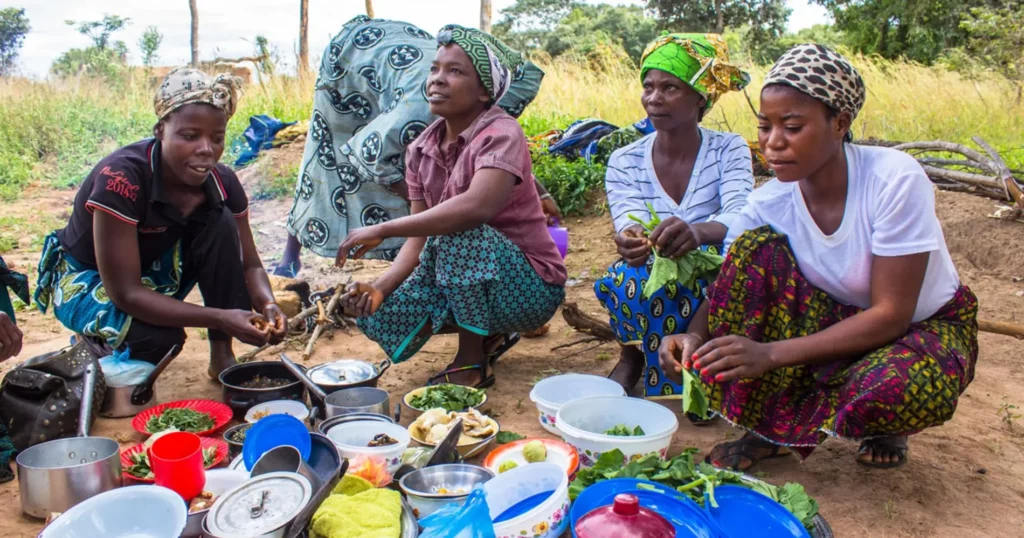
Cover photo: Forest foods in Zambia are diverse and nutrient rich. At a food fair in Luwingu, Zambia, in April 2017, women display items they regularly forage and cultivate. Photo by Joe Nkadaani / CIFOR.