About Us
RAENS (pronounced RAINS) is an innovative and sustainable transdisciplinary agroecology research and knowledge network in Southern Africa. The overall goal of RAENS is to strengthen existing initiatives, showcase the potential and scalability of agroecology, facilitate shifts in agricultural training and research towards agroecology, and to inform policy, thereby leading to an enabling landscape for agroecology uptake, research and training.
The specific objectives are:
- To improve coordination of agroecology research in the region, in collaboration with farmer organisations, extension workers, market actors, civil society groups and other grassroots practitioners. Members of the research network are undertaking farmer-led agroecological research at pilot sites in five member countries (South Africa, Zimbabwe, Zambia, Malawi and Tanzania). There are regional communities of practice (COPs) on key agroecology topics;
- To develop the next generation of agroecology scholars and practitioners in the region through the learning network. This includes development of agroecological curricular materials for various levels of teaching, as well as supervision of students;
- To increase the availability and awareness of agroecological knowledge materials, methodologies and tools, through knowledge management (see our agroecology knowledge platform);
- To contribute to an improved policy environment for gender-sensitive agroecological transitions at local, national and regional levels through evidence-based policy analysis and advice.
What do we mean by agroecology?
As agroecology has become more popular, definitions have proliferated. Some of these reflect minimalist interpretations of agroecology as just a few sustainable agronomic practices, while others are more expansive and recognise that agroecology is concerned with transformation of the entire food system. As a network, we developed a position paper to communicate the understanding of agroecology that underpins the work of RAENS members.
We build from the definition used by the High Level Panel of Experts on Food Security and Nutrition (HLPE) of the UN Committee on World Food Security (CFS):
“Agroecological approaches favour the use of natural processes, limit the use of purchased inputs, promote closed cycles with minimal negative externalities and stress the importance of local knowledge and participatory processes that develop knowledge and practice through experience, as well as more conventional scientific methods, and address social inequalities. Agroecological approaches recognise that agrifood systems are coupled to social–ecological systems, from food production to consumption and involve science, practice and a social movement, as well as their holistic integration, to address food security and nutrition” (HLPE 2019).
Our understanding is grounded in the HLPE’s 13 principles and the Food and Agriculture Organisation’s (FAO) 10 elements of agroecology. Read our position paper here.
Founding Members
The initial work to establish the network was undertaken by the University of Cape Town (UCT) and funded by the Seed and Knowledge Initiative (SKI). National-level agroecology knowledge networks (AEKNs) were established in 2024 in South Africa by UCT and in Zimbabwe by Marondera University of Agriculture, Science and Technology (MUAST). Similar AEKNs were established in early 2026 in Malawi by Lilongwe University of Agriculture and Natural Resources (LUANAR) and in Zambia by Mulungushi University.
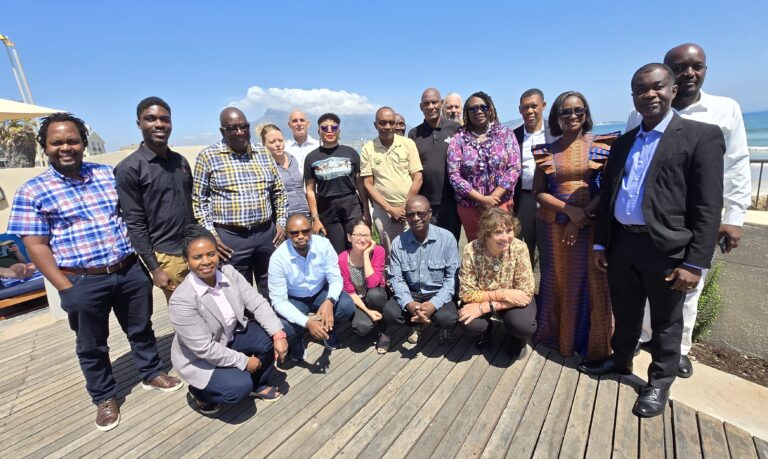
RAENS has received support from the European Union (2025-2028) to expand and deepen the regional network. The 4-year project to support and grow RAENS is coordinated by CCARDESA and involves a group of eight implementing partners:
- University of Cape Town (UCT), South Africa (project lead)
- Lilongwe University of Agriculture and Natural Resources (LUANAR), Malawi
- Sokoine University of Agriculture (SUA), Tanzania
- Marondera University of Agriculture, Science and Technology (MUAST), Zimbabwe
- The Zambia Agriculture Research Institute (ZARI), Zambia
- Center for International Forestry Research and World Agroforestry (CIFOR-ICRAF), Malawi and Zambia
- Research Institute of Organic Agriculture (FiBL), Switzerland
- Young Professionals for Agricultural Development (YPARD), Germany
The regional coordinating partner is the Centre for Coordination of Agricultural Research and Development for Southern Africa (CCARDESA).
The project to expand RAENS and strengthen its research, policy and advocacy work from 2025 to 2028 is funded by the EU